National Sunglasses Day

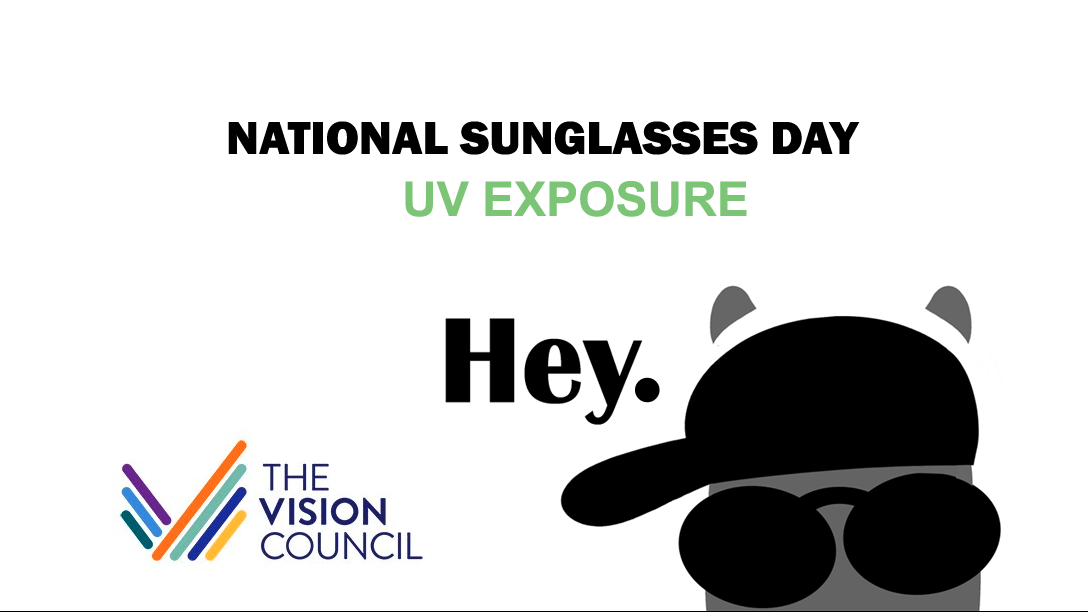
Curtis for National Sunglasses Day 2025.

By THE VISION COUNCIL

NATIONAL SUNGLASSES DAY is a commemorative day celebrating the importance of wearing ultraviolet (UV)-protective sunwear and eyewear — and brought to life each year by The Vision Council on June 27.

The Vision Council encourages members and the industry at large to participate in National Sunglasses Day by posting on social media channels using the official hashtags, #SunglassesSelfie and #NationalSunglassesDay, and tagging @TheVisionCouncil on Facebook and Instagram and @OpticalIndustry on Twitter.

The Vision Council has created downloadable marketing assets, including sample social media graphics and posts, web banners, posters, logos and more. Visit the Vision Council here »

END

Thank you for reading & sharing this important topic. And thank you Curtis for helping us with it.


H&Co logo in Hattingdon brown.

HATTINGDON HORSES

The Science behind why we love Hats

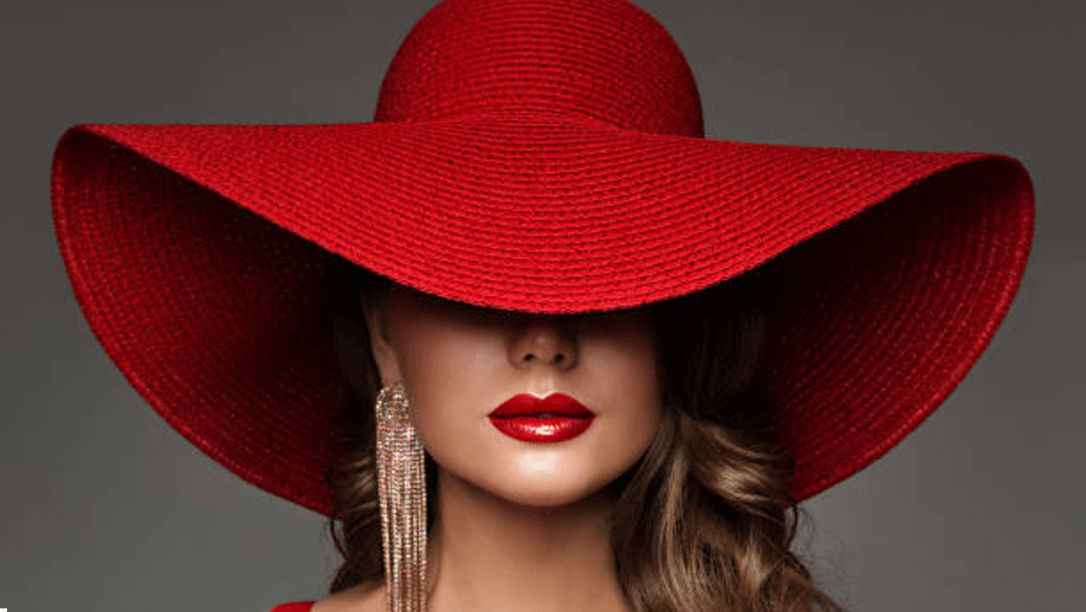
Banner lady wearing very large red fashion hat.

Hey there hat lovers. Check out this article. Have you seen it yet? It begins —

Open Quote clipart in black.

HATS have long held a special place in human culture. From practical protection against the elements to fashionable statements, they have adorned our heads for centuries. But what is it about these headpieces that capture our imagination and draws us in? Beyond their mere utility, there’s a fascinating science behind why we love hats. Let’s delve into the reasons that make hats so universally appealing and explore the psychology and anthropology behind our enduring attachment.

Here is a beginning, See the full article at https://neurolaunch.com/psychology-of-wearing-hats/.

Expression of Identity and Personality

Hats serve as a powerful means of expressing our individuality and personality. Just like our clothing choices, the type of hat we wear sends a message about who we are and what we value. From fedoras to baseball caps, each style carries its connotations and associations. By donning a specific hat, we can align ourselves with a particular subculture, or profession, or even evoke a sense of nostalgia. This ability to communicate and shape our identity through headwear undoubtedly contributes to our fascination with hats.

Social Signaling and Conformity

Humans are social creatures, and hats play a significant role in our social interactions. Through the ages, certain hats have become associated with specific groups or communities, creating a sense of belonging and solidarity. Wearing a hat that reflects our affiliation with a particular sports team, for example, can instantly establish a bond with fellow fans. Conversely, conforming to social norms and wearing a hat appropriate for a specific occasion or setting helps us fit into a collective identity, reinforcing our desire for social acceptance. • Continue to full article »

We thought you would enjoy it. By for now.

HATTINGDON & Co


Hattingdon Brown H Logo

IMAGE SOURCE: Lady modeling large red hat. See https://www.istockphoto.com/photos/woman-with-big-hat »

Nat’l I love Horses Day

Featured image featuring Dee Dee Hattingdon.

On July 15, “National I Love Horses Day,” we express our love and gratitude for that marvelous and magnificent creature — the horse. With over 200 breeds, these spirited animals give humans much to love. Their loyalty and devotion throughout history is a fraction of the many reasons we love them.

Their contribution to mankind has been incalculable. Thus began  the horse’s unrivalled historical influence across millennia to the present day. “Civilization was built on the back of a horse.” (Podcast).

Did you know . . . ?

• In the course of 55 million years, the horse has developed from a small animal the size of a cat, into the many varieties of horses we have today.

• The use of horses by humans began roughly 5,500 years ago on the windswept grasslands of the Pontic-Caspian Steppe.

• Today there are more than 600 horse breeds.

• Horses come in all shapes and sizes, and hundreds of different horse breeds exist today. Before being domesticated, horses ran wild. Over time, humans caught and trained horses, and then they started to strategically breed them to refine certain desirable traits.

• Horses “lock” their legs to avoid collapsing while sleeping standing up.

• Horses have a “stay apparatus” in their hind legs that allows them to lock their legs without having to use their muscles to support themselves.

• According to Equus, horses have a 350-degree view of the world, compared to a human’s view of about 90 degrees. Since a horse’s eyes are positioned on the sides of their head, they can see almost everything around them without turning their head. Horses can’t see a very narrow area directly in front of and behind them.

• Horses use several different types of communication. They use body language to communicate with other herd members, and everything from the twitch of an ear to the position of a horse’s tail can carry a message.

• Horses can use their eyes together in a form of binocular vision, but they can also use their eyes independently in monocular vision. Essentially, a horse can look at an object using their right eye while also looking behind themselves with their left eye. Each eye delivers information to a different half of the horse’s brain, and those brain halves work independently.


A hatful of smiles

Hattingdon was created to raise money to provide for the protection of horses. We are retired now, but we thought you might enjoy seeing “the hatted one” here from time to time. We hope it gives you “a hatful of smiles”.

Updated 25 July 2025.


Hattingdon H logo.

World Vegan Day

World Vegan Day banner 2024.

NOVEMBER 1ST

Hey! It’s World Vegan Day.

On this day, Vegan groups and practitioners of veganism organize educational drives and workshops to bring attention to the importance of animal rights and kindness towards our fellow creatures on Earth.

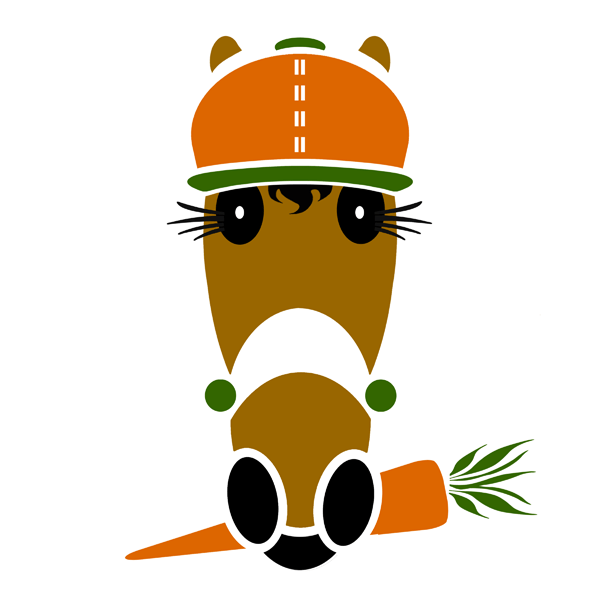
Hattingdon is vegan of course. All horses naturally are (wink). Oh. Look who has stopped by. With a nice big carrot.

“Got Treats?'” Hattingdon.

Vivian

Hattingdon creator Vivian has been a vegan for decades. She says, “I never was much of a meat eater. I used to push it around my plate when I was a kid. I just did not want it. I became a vegetarian in college, and a vegan a bit later when I learned about it. I am an old timer now and doing very, very well on it”.

Good for you

Some research has found there are certain health benefits linked to vegan diets such as lower blood pressure and cholesterol, lower rates of heart disease, type 2 diabetes and some types of cancer. Going vegan is also a great opportunity to learn more about nutrition and cooking, and improve your diet. » Read more »

See also 15 Types of Carrots at Live Eat Learn »

Thank you everyone.


Hattingdon H logo in her signature brown.