We missed Classic Hat Monday but that does not mean we are missing out on a classic hat this week. No siree Bob.
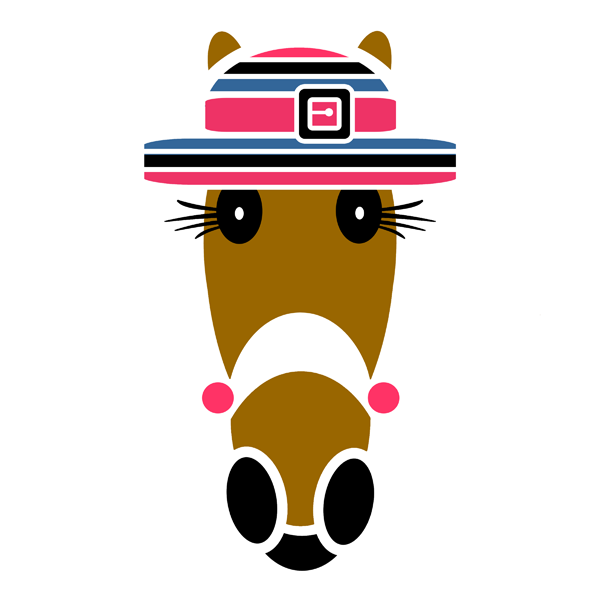
This hat was a mega hit when it was released. Vivian named the hat “Genevieve”. She loves stripes, and this hat also features her favourite colours.
Genevieve Hattingdon.
We had a crazy start to the week. You know what that can be like. It is so nice to be able exhale and get back into our usual groove.
Oh, by the way. Here is where the expression ‘no siree Bob’ comes from. “It is an interjection (US, colloquial) meaning definitely not; no way.” (Source)
There is also of course, ‘yessiree Bob’. Its history is a bit more involved.
‘Yessiree Bob’ comes from “Yes sir!” The “ee” added to the end of “sir” is an exclamation of informality, positivity, and excitement. During the mid-19th century, “Bob” was used as a euphemism for “God,” as in “So help me, Bob!” According to Google N-grams the idiom came into substantial use towards the end of the 19th century.’ (Source)
We admit it. We had not heard of Google N-grams. We need to get out more. Wink. Bye for now!
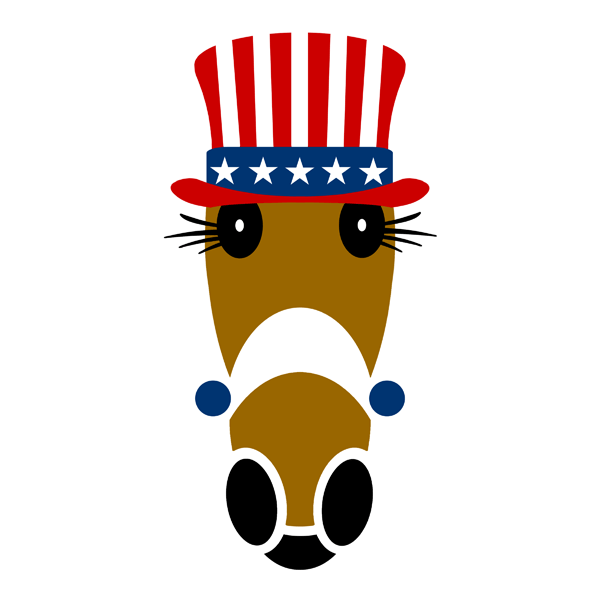
Hattingdon wears a top hat inspired by the combination of red and white stripes along with a dark blue hatband decorated with white stars for this year’s Flag Day. Isn’t she sweet?
Sammie Top Hat.
Let’s check out some history.
First flag
On this day, June 14th, 1777, the Continental Congress approved the United States national flag. It had 13 stars and 13 stripes symbolizing the 13 original colonies.
Fifteen stars
The United States added stars to the flag when welcoming new states.
When Kentucky and Vermont joined the union, the flag took on two more stars from the original. From 1795 to 1818, 15 stripes and 15 stars graced the flag.
Anticipating a crowded field of stripes, lawmakers decided to honor a new added state with a star, leaving the stripes at the original 13 after 1818.
Robert G. Heft
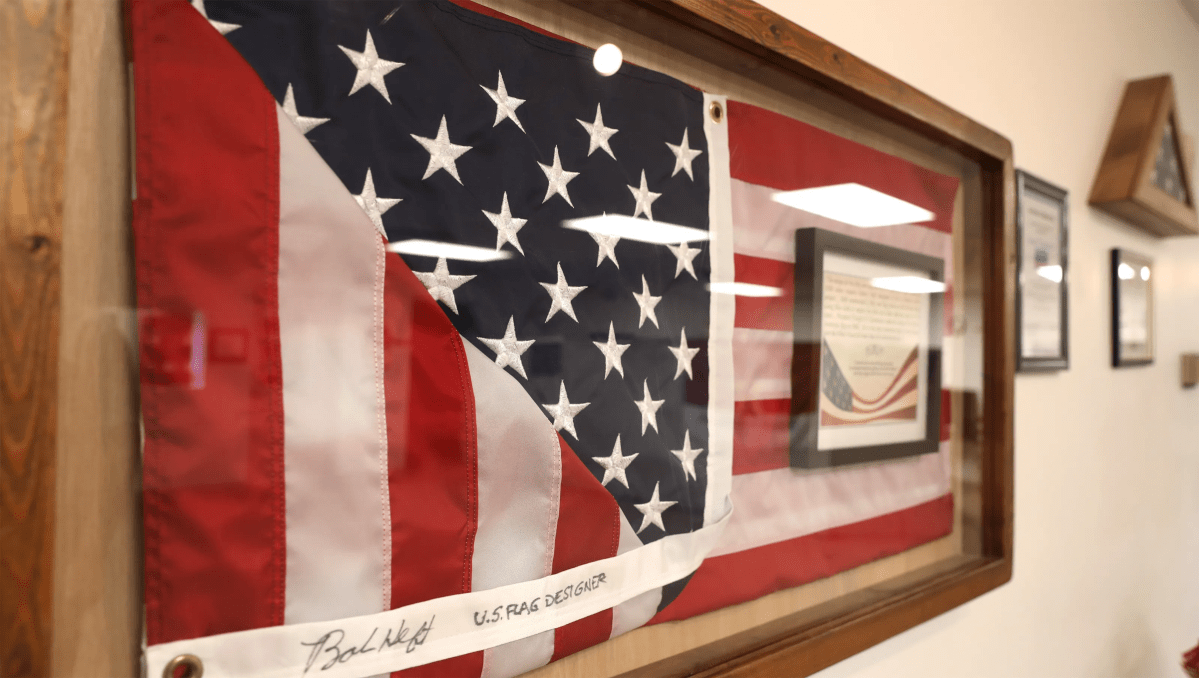
The current flag, with 50 stars and 13 stripes, was designed in 1958 by 17-year-old high school student, Robert G. Heft, of Lancaster, Ohio.
President Dwight D. Eisenhower chose his design out of 1,500 entries. It is a grand old flag — as the song says — isn’t it?!
Americans who proudly fly “Old Glory” on the Fourth of July can thank a Lancaster teenager for the current design of the flag. Robert G. Heft designed and sewed the prototype 60 years ago for a class project at Lancaster High School.





 HATTINGDON HORSES