Hello there. You have heard that “reading is fundamental.” No doubt about it.
Founded in 1966 by Margaret McNamara, Reading Is Fundamental (RIF) connects children with the joy of reading — to spark imaginations and possibilities — and putting kids on a path of reading proficiency.
RIF is the oldest and largest non-profit children’s literacy organization in the United States. RIF provides books and reading resources to children nationwide with supporting literacy resources for educators, families, and community volunteers.
• Library Week
Mark your calendars! National Library Week 2024 will be celebrated Sunday, April 7th through Saturday, April 13th.
Hattingdon is ready as you can see in one of her all-time favourites. We named the design Dewey. She looks positively darling.
Dewey Hattingdon.
Right to Read Day
Monday, April 8th is Right to Read Day, a National Day of Action in support of the right to read.
In response to the surge in book challenges, the American Library Association has designated every Monday of National Library Week as Right to Read Day, a day of action that encourages everyone to take concrete steps to fight back against censorship and protect and celebrate the right to read freely.
Join in on #RightToReadDay, and every day after, in fighting censorship, and supporting libraries and the dedicated staff who make them work.
Protect our freedom to read!
You can find additional resources to amplify and support the Unite Against Book Bans campaign here.
National Library Week 2023 — April 23rd through the 29th — is celebrating with the theme “There’s More to the Story.” Libraries are full of stories, in a variety of formats from picture books to large print, audiobooks to ebooks, and more.
But before we go any further, first a hat. It is a wonderful fascinator made from books. Vivian named it Dewey, after the Dewey Decimal System.
Dewey.
Now, a few of the major contributions made by libraries to the benefit of mankind.
1. Libraries maintain history and truth
Since the ancient Roman Empire, libraries had a purpose to store different kinds of information, such as historical, literary, musical, military documents. Even though in the past 2,000 years many changes, and innovation have occurred, libraries have kept their main purpose to provide visitors with the information they are looking for and be certain about giving the truth.
2. Libraries offer free educational resources
Public libraries play an important role in supporting education and literacy. They provide countless resources, such as educational materials, trainings, courses, scientific publications, etc. to visitors. Public libraries provide their services not only face-to-face, but some of them have also integrated e-learning. Furthermore, several published studies confirmed that public libraries had a tremendous importance in every community by providing various services for educational purposes.
3. Libraries help build communities
People come to libraries not only looking for information, but also, for finding themselves and their communities. Mothers join baby story-times clubs, elderly people attend events and find ways to connect with people. While teenagers meet up in libraries with their study groups for teambuilding or school projects and readers discuss current events in the periodical’s rooms.
Additionally, libraries serve as community centers for diverse populations by supporting non-English speakers to help them integrate into the community.
Furthermore, for artists and art enthusiasts, public libraries can provide a place to arrange exhibitions and to promote themselves.
4. Libraries are transparent with the services they provide
Privacy is a growing concern in society these days. Data tracking systems that collect, compare and share information might affect consumers’ trust. However, all the services provided in public libraries are focused on consumers and not solely on revenue. That is why libraries do not track your reading history or which trainings you went to. It is simply not in the field of their interest.
5. Libraries contribute to increasing economy
Because libraries are free to use for patrons, not so many people consider the role they play in the economy. Public libraries provide access to information about business planning, market research and finance opportunities for entrepreneurs who are looking for spaces to network, conduct research, use technology, and arrange meetings. Even though job requirements are changing fast, it is possible to upskill the workforce without spending enormous amounts of money. Technology in libraries can be innovative, offering access to expensive tolls, training and skills that otherwise would not be available for everyone.
Read Across America Day seeks to promote reading. This day is organized by the National Education Association. They created the observance in 1997 with the objective of motivating American children to read. According to the National Education Association, children who spend more time reading do better in school.
Read Across America Day is celebrated annually on March 2nd, in memory of children’s author Dr. Seuss’ birthday.
Read Across America Ball Cap.
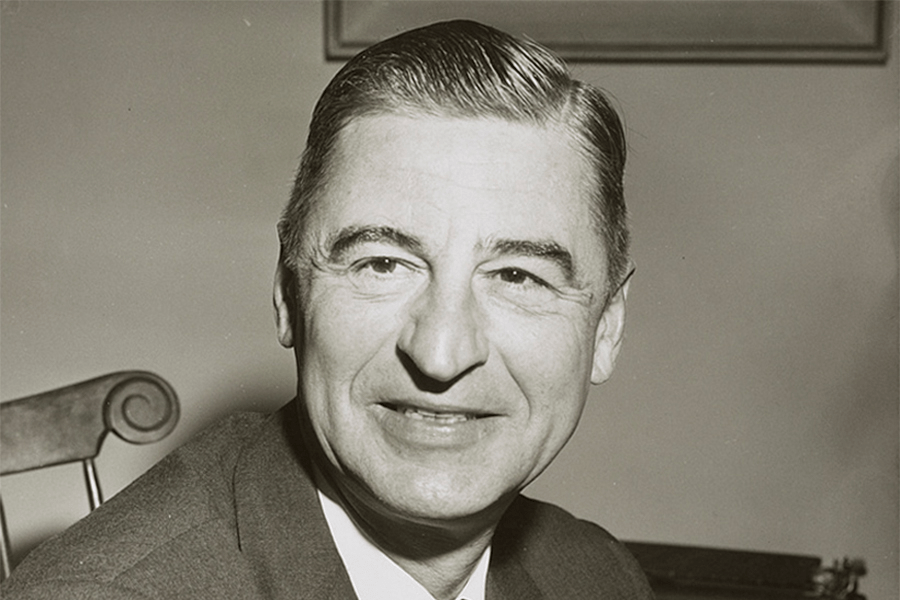
Theodor Seuss Geisel was born in Springfield, Massachusetts, on March 2, 1904, and grew up to write some of the most outrageous and original stories of all time. The inventive rhymes, colorful illustrations, and imaginative characters that populate Dr. Seuss’s books have delighted readers for generations and spawned movies, museums, theme parks, and more.
And to Think I Saw It on Mulberry Street, the first of more than 40 stories Geisel published, was turned down 27 times before a publisher finally gave it the green light.
Theodor “Dr. Seuss” Geisel was born on March 2, 1904 in Springfield, Massachusetts. Photo via Wikimedia Commons
Geisel made an Academy Award-winning documentary film with his wife, Helen Palmer, called Design for Death in 1947. It is about World War II Japan, propaganda, and Pearl Harbor.
One of Geisel’s stories, Gerald McBoing Boing, was made into an animated short and also won an Oscar in 1950.
As a student at Dartmouth College, Geisel was caught drinking gin with a group of friends. Consuming alcohol was still illicit under Prohibition, and Geisel was subsequently banned from participating in extracurricular activities. But the future icon didn’t want to give up writing for the school’s humor magazine, The Jack-O-Lantern. And so, instead of backing down, Geisel changed course and began writing under a pen name: Seuss.
Clearly interested in political cartoons, Geisel took up a job creating Allied propaganda illustrations and videos during World War II. Not only did he draw them, but he also wrote all the content and even included some of his signature rhymes.
In honor of National Book Lovers Day August 9, we put away our smartphones, pull out a good book and simply read. (Audiobooks are okay too.)
Here’s Hattingdon to get us in the mood.
Dewey Hattingdon.
Books are the purest form of escapism. They can take you to any time, any place, or any culture.
From clay tablets to today’s eBooks, literature has played a crucial role in preserving cultures, educating the masses, and storytelling.
Thanks to Johannes Gutenberg’s 15th-century printing press, anyone, not just royalty, monks or landed gentry, could read and own books. But, alas, there was no overnight shipping.
Today, join a book club or re-read a favorite novel because National Book Lovers Day rocks! More »
Dewey
The Dewey Decimal Classification, colloquially known as the Dewey Decimal System, is a proprietary library classification system which allows new books to be added to a library in their appropriate location based on subject. It was first published in the United States by Melvil Dewey in 1876.
“Dewey” Hattingdon (seen above) is named in honor of the Dewey Decimal System.






 HATTINGDON HORSES