
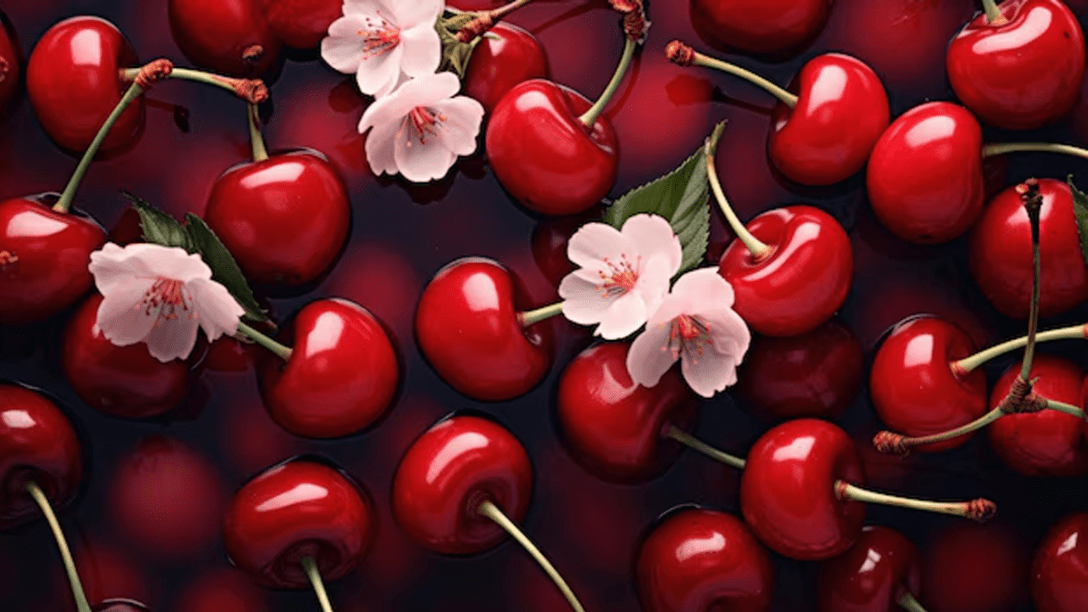
AT this time of summer, the cherry harvest is at its peak. Today is the perfect time to celebrate all things “cherry”. It is July 16th, National Cherry Day.
Many farming communities celebrate with a harvest festival. We don’t have to tell you what is in the baked goods for those celebrations.
The Hat
Hattingdon can wait no longer to join the festivities and show off her new hat — designed especially for her for this day. How cool does she look? Ain’t she sweet?

Variety of cherries
Cherries are a fun and tasty fruit. There are sweet cherries for eating fresh. There are tart or sour varieties that are best for baking. There is even a yellow variety. Yellow varieties are quite sweet. In addition to tasting good, cherries are healthy eating.
Super snack
Pop a few into your mouth and feel guiltless. Why!? Simply because they are good for you. While they are sweet, they are also low in calories.
Cherries are high in fiber. They are high in vitamins A and C. Their high level of antioxidants helps to fight free radicals. It contains anti-inflammatory properties, too. And, they have lots of potassium. Cherries are gluten-free.
Studies show that they help to lower blood pressure. And, if you have trouble sleeping, have a few pieces of this magical fruit in the evening. They contain melatonin, a natural chemical that helps to induce sleep.
Even diabetics can enjoy the natural sugars in cherries. But, don’t eat a whole bunch at one sitting. Rather, eat a few at a time.
Cool facts
• The first recording of the cultivation of cherry trees goes back to ancient Mesopotamia in 300 B.C.
• Ancient Romans and Chinese dynasties also cultivated them.
• Prehistoric caves in Asia and Europe contained cherry pits.
• Cherry blossoms are a symbol of beauty and renewal.
• Cherry trees are not native to N America. Early settlers brought them to the New World in the 1600s.
• According to legend, George Washington chopped down the family cherry tree. But, when confronted by his father, he could not tell a lie. The rest as they say is history.
• The first time cherry turnovers were made was in 1440. At the time, cake was banned in some European countries.
• The average mature tree produces approximately 7,000 fruit each year.
• Japanese cherry trees do not produce fruit. Rather, they are ornamentals.
• On August 30, 1909, Japan announced it was donating 2,000 cherry trees to the United States for planting along the Potomac River. The trees arrived in the United States on January 6, 1910. Today, millions of people visit D.C. at Cherry Blossom time just to see them in bloom.
_______
You see. We are more than just pretty hats. Wink. See you again soon. Love, Hattingdon.

©Vivian J Grant. All Rights Reserved.
• Featured Image: Red Cherries. Freepick.com.

 HATTINGDON HORSES